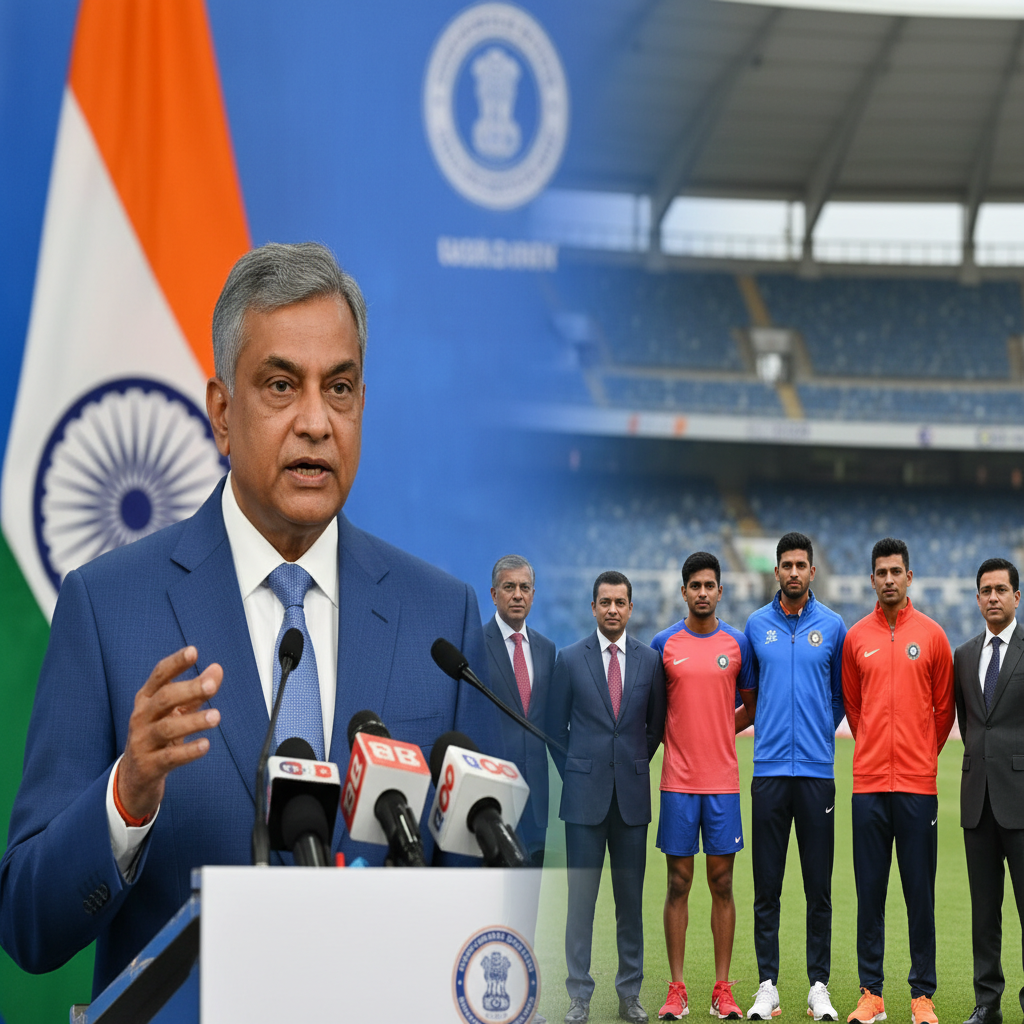
NEW DELHI – Union Minister Mansukh Mandaviya has laid down a clear roadmap for India’s athletic ambitions, asserting that the nation’s sporting future is inextricably linked to stronger coordination between its athletes and government bodies. Speaking on the critical juncture for Indian sports, Mandaviya emphasized that a synchronized effort is not just beneficial, but absolutely essential for transforming India into a formidable global sporting powerhouse. This statement, delivered with conviction, resonates deeply within the sports fraternity, highlighting a long-felt need for a more integrated approach to sports development.
The Vision for Indian Sports: A United Front
Minister Mandaviya’s address underscored a profound shift in perspective, moving away from fragmented efforts towards a cohesive national strategy. He articulated that ‘coordination’ isn’t merely about administrative convenience; it’s about fostering an ecosystem where athletes’ needs are understood, resources are optimally allocated, and policies are framed with direct input from those who live and breathe sports. This vision envisages a scenario where government support, infrastructural development, coaching expertise, and athlete welfare programs are not just parallel initiatives but interconnected components of a grand strategy. For too long, Indian athletes have often navigated a challenging landscape, sometimes feeling isolated from the very systems meant to uplift them. Mandaviya’s call for stronger coordination seeks to dismantle these silos and build bridges that empower every sportsperson.
Bridging the Gap: Past Challenges and Future Solutions
Historically, Indian sports development has grappled with various challenges, including bureaucratic delays, insufficient funding for non-marquee sports, and a perceived disconnect between policy-makers and the ground realities faced by athletes. Mandaviya’s emphasis on coordination is a direct acknowledgement of these hurdles. Stronger coordination means streamlining the flow of funds to ensure timely access for training, equipment, and international exposure. It implies building world-class infrastructure not just in metropolitan hubs but also at the grassroots level, identifying talent early, and nurturing it systematically. Moreover, it involves transparent communication channels where athletes can voice concerns and contribute valuable insights, making them active stakeholders in policy formulation rather than passive recipients. This proactive approach aims to solve historical inefficiencies, promising a more agile and responsive sports administration.
Empowering Athletes: A Two-Way Street
The Union Minister’s remarks highlight that empowering athletes is a two-way street. While the government plays a pivotal role in providing resources, infrastructure, and a robust policy framework, athletes, too, have a crucial part to play. Their feedback on training methodologies, competition schedules, dietary needs, psychological support, and post-career transitions is invaluable. By actively involving athletes in these discussions, policies can be tailored to meet specific requirements, enhancing performance and ensuring holistic development. A stronger partnership would also mean better mentorship programs, scholarship opportunities, and a clear career path beyond competitive sports, ensuring that an athlete’s dedication translates into long-term security and respect. This collaborative model promises to create a more supportive and performance-driven environment.
Beyond Medals: Cultivating a Sporting Culture
While winning medals on the international stage remains a significant aspiration, Minister Mandaviya’s broader message hints at something more profound: cultivating a vibrant sporting culture across India. Stronger coordination isn’t just about elite athletes; it extends to promoting physical literacy from a young age, integrating sports into the education system, and making recreational sports accessible to all. When government and athletes work in tandem, they can inspire millions, encourage participation, and harness the immense potential of sports for national development, health, and character building. The ripple effect of successful coordination will be visible not just in medal tallies but in the overall fitness, discipline, and competitive spirit of the nation.
SportBuzzers’ Take: A Call to Action
The call for stronger coordination between athletes and governments by Union Minister Mansukh Mandaviya is a critical and welcome directive. For SportBuzzers.com, this signifies a crucial turning point. The challenge now lies in translating these words into concrete action. It requires commitment from all stakeholders – sports federations, state governments, private organizations, and the athletes themselves. If India can successfully foster this synergy, providing seamless support and listening intently to its sporting heroes, the dream of becoming a global sports superpower is not just ambitious, but eminently achievable. The ball is now in motion, and the future of Indian sports hinges on how effectively this crucial coordination is implemented.