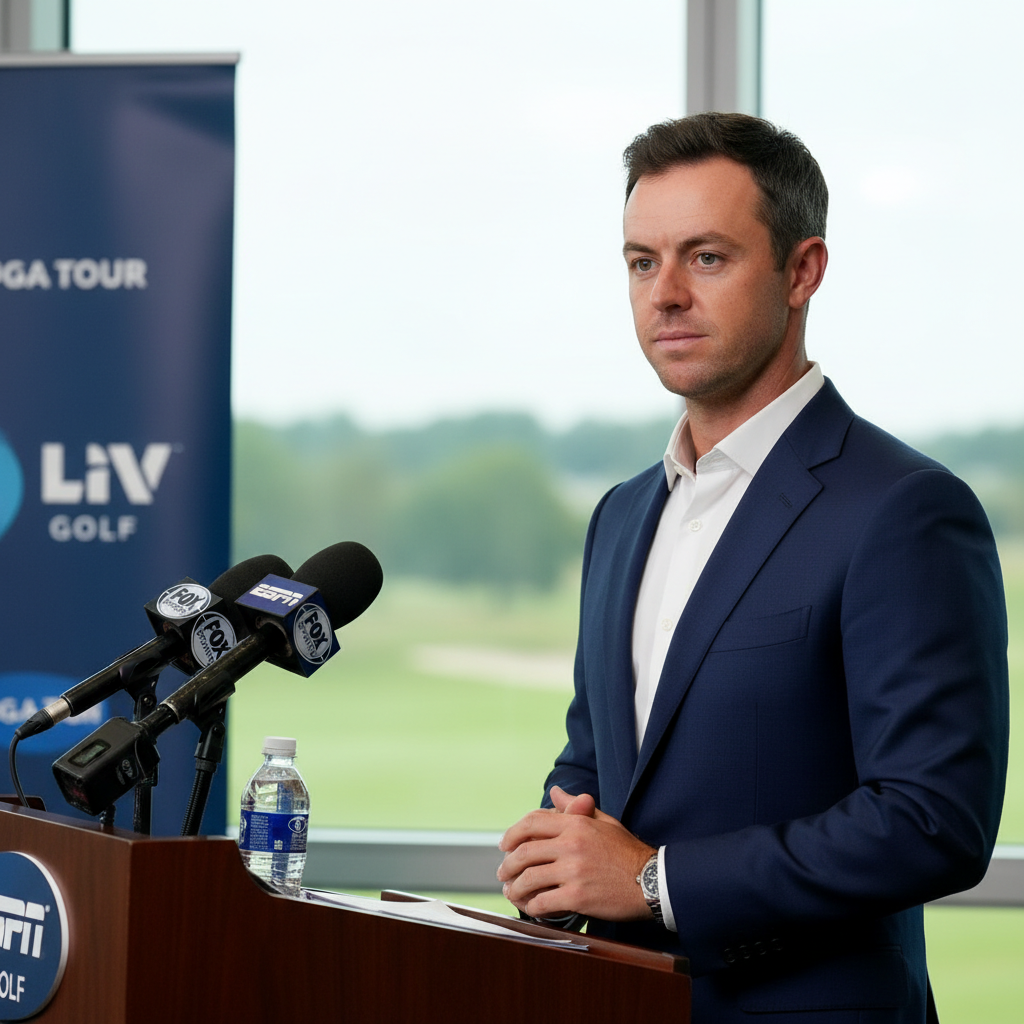
Golfing titan Rory McIlroy, long one of the most vocal critics of the breakaway LIV Golf league, has signaled a significant shift in his stance, suggesting that players who defected should be welcomed back to the PGA Tour. In comments that have sent ripples through the professional golf world, McIlroy stated that bringing these golfers back is “good business” for the tour, aiming to strengthen the sport as a whole. However, in typical McIlroy fashion, he couldn’t resist delivering one more subtle, yet pointed, shot at those who initially chose the Saudi-backed circuit.
McIlroy’s Evolving Perspective: A Shift from Defender to Pragmatist
For years, McIlroy stood as the PGA Tour’s most impassioned defender, often engaging in verbal sparring with LIV Golf proponents and dismissing the rival league’s legitimacy. His comments today mark a pragmatic evolution, reflecting perhaps a deeper understanding of the fractured landscape of professional golf. “My whole thing is I’ve always been an advocate for getting the best players to play together,” McIlroy reportedly said, emphasizing that a unified front benefits fans, sponsors, and the sport’s overall health. This perspective acknowledges that continued division only harms golf’s appeal and marketability, diminishing the star power concentrated on any single tour.
The sentiment of “good business” underscores a recognition that the PGA Tour’s strength is directly tied to its roster of elite talent. Allowing top players, regardless of their past allegiances, to compete under one banner would undeniably elevate the quality and competitive intrigue of events. This move, if it comes to fruition, would bring back major champions and fan favorites, potentially boosting viewership, media rights, and sponsorship opportunities for a PGA Tour that has undoubtedly felt the financial and talent drain caused by LIV Golf.
Strengthening the Tour: A Unified Future?
The potential return of LIV golfers isn’t merely about individual players; it’s about consolidating golf’s elite talent pool. For the last few years, fans have been deprived of seeing all the world’s best golfers competing week in and week out. Major championships have offered glimpses, but regular season events have suffered from the split. McIlroy’s advocacy for a reintegration suggests a pathway towards a future where the PGA Tour once again boasts an undisputed lineup of the sport’s brightest stars. This consolidation is vital for golf’s long-term commercial viability and its ability to attract new generations of fans. A stronger, unified tour is better positioned to negotiate lucrative broadcast deals and offer more compelling storylines, ensuring golf remains a top-tier global sport.
The Undeniable Jab: A Reminder of Loyalty and Consequence
Despite his calls for reunification, McIlroy, ever the competitor and a man who has shown unwavering loyalty to the PGA Tour, couldn’t resist a final, subtle dig. While advocating for their return, he reportedly added a caveat: “There should be some understanding that there were consequences to those actions.” This statement, while not a direct condemnation, serves as a clear reminder that their decisions to leave came with implications and that any return shouldn’t be entirely without acknowledgment of that past. It’s a nuanced position that blends pragmatism with a touch of lingering disappointment, reflecting the emotional toll the golf civil war has taken on players like McIlroy who stayed loyal. It suggests that while the door may be open, it’s not necessarily a seamless or consequence-free re-entry.
This “shot” is characteristic of McIlroy’s candid nature. He recognizes the strategic importance of reconciliation but isn’t willing to completely erase the history or the perceived betrayal felt by many who remained with the PGA Tour. It hints at potential conditions or a period of reintegration that acknowledges the journey taken by both sides.
Implications for Professional Golf’s Future
McIlroy’s comments carry significant weight, not just because of his status as a major champion and former world No. 1, but also because of his past involvement in player leadership and his vocal role throughout the PGA-LIV saga. His shift could signal a broader change in sentiment among PGA Tour players and leadership, potentially paving the way for more substantive unification talks. If one of the most ardent critics of LIV Golf can embrace the idea of their return, it suggests that the commercial imperatives and the desire to heal the sport’s divisions are taking precedence. The ball now seems to be in the court of PGA Tour leadership and potentially LIV Golf officials to find a mutually agreeable framework for reintegration, one that balances business necessity with a fair recognition of past actions.