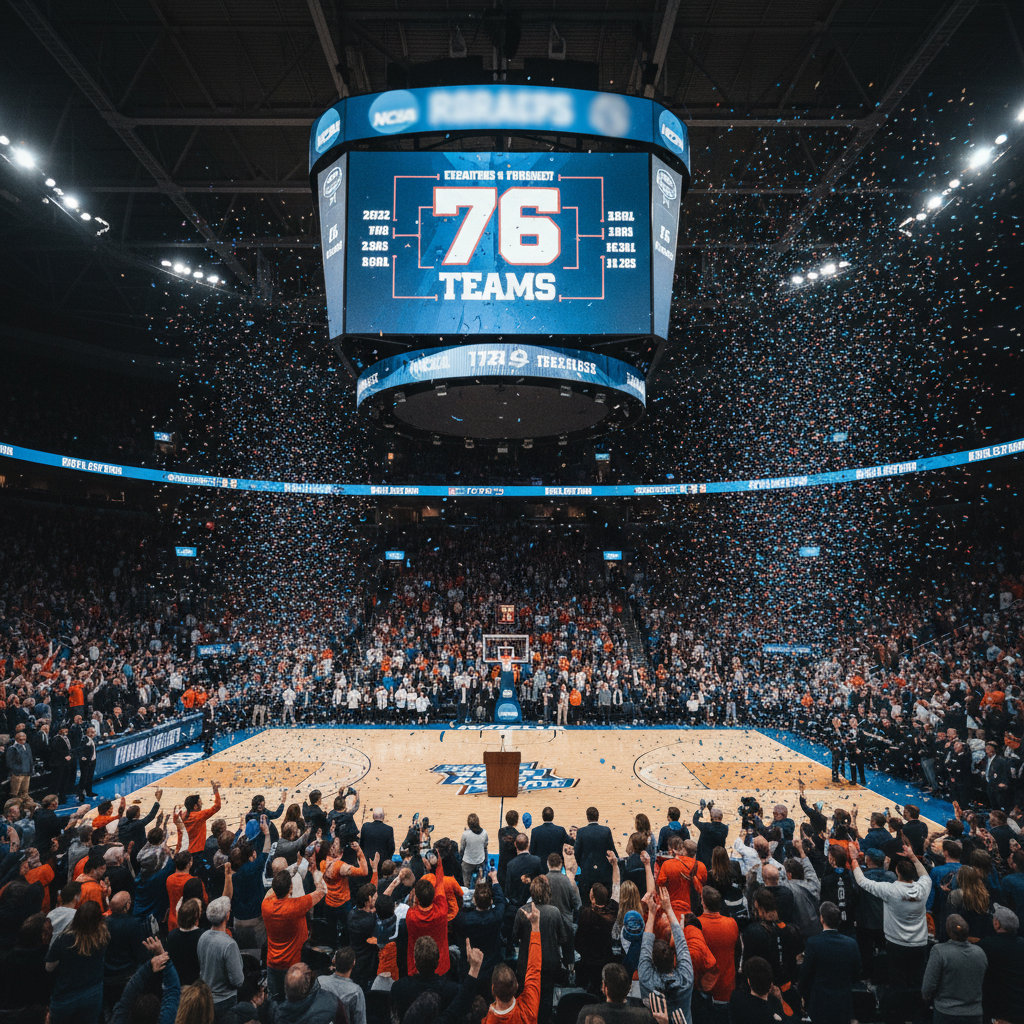
SportBuzzers.com Exclusive: In a monumental decision set to reshape the landscape of collegiate basketball, the NCAA men’s and women’s basketball tournaments are officially expanding to 76 teams. Committee members voted to approve the historic change on Thursday, ushering in an era of unprecedented scale for March Madness. This significant expansion promises not only a new tournament format but also an anticipated revenue boom and a host of additional games, guaranteeing more thrills, more Cinderellas, and more compelling narratives for fans across the nation.
A Bold New Tournament Structure Unveiled
The expansion from the familiar 68-team format to a sprawling 76 teams will fundamentally alter how teams qualify and progress through the Big Dance. While exact details on the new seeding and bracketology are still being finalized, preliminary indications suggest a significant increase in play-in opportunities and at-large bids. Previously, the ‘First Four’ featured four games for the final eight teams vying for a spot in the main 64-team bracket. With 76 teams, insiders speculate an expanded play-in round could see anywhere from 12 to 16 additional teams competing for main bracket berths, creating a ‘First Twelve’ or even a ‘First Sixteen’ series of games. This means more teams from smaller conferences will have a legitimate shot at the national stage, and more power conference bubble teams will find their way into contention, ensuring broader representation and an even more inclusive tournament field.
The Envisioned Revenue Tsunami
The financial implications of this expansion are nothing short of colossal. More games translate directly into more broadcast hours, driving up the value of existing and future media rights deals. Industry experts project a substantial increase in revenue for the NCAA, which will subsequently trickle down to member institutions. This includes augmented advertising revenue, increased ticket sales for the expanded play-in rounds, greater merchandise sales, and enhanced sponsorship opportunities. The influx of capital could be used to fund various collegiate programs, improve facilities, and potentially even increase resources for student-athletes, though the specifics of revenue distribution will be a critical point of discussion in the coming months. For schools, especially those on the NCAA bubble, the economic incentive of making the tournament just grew exponentially.
More Games, More Drama: Impact on the Court
For fans, coaches, and players, the expansion means one thing above all: more basketball. Additional games promise more high-stakes matchups, more opportunities for dramatic upsets, and a longer, more engaging tournament experience. The expanded field will provide a lifeline to many teams that previously just missed out on an at-large bid, giving coaches and players more to strive for throughout the regular season. While some purists might express concerns about potential dilution of the field, the prevailing sentiment is one of excitement, anticipating a broader array of teams and playing styles. The extra games will also intensify the early rounds, setting the stage for even more memorable moments of March Madness lore. The challenge for teams will be managing player fatigue through potentially more games, while the opportunity for heroic runs deep into the tournament will grow.
Reactions Across the Collegiate Landscape
The announcement has sent ripples of excitement and discussion throughout the collegiate sports world. Coaches from mid-major conferences are particularly enthusiastic, seeing the expansion as a vital pathway for their programs to gain national recognition and much-needed financial boosts. Power conference coaches, while generally supportive, will be adapting to the implications for scheduling and tournament preparation. Players, especially those on the cusp of making the cut, will undoubtedly feel an added surge of motivation. While some traditionalists might question the ever-growing size of the tournament, the overwhelming response points to a positive embrace of a bigger, bolder, and more inclusive March Madness. The NCAA’s move underscores a commitment to providing more opportunities and maximizing the appeal of its premier sporting events.
As the collegiate basketball world eagerly awaits further details on the precise format and implementation, one thing is clear: the NCAA men’s and women’s basketball tournaments are about to enter a thrilling new chapter. SportBuzzers.com will continue to bring you the latest updates as this historic expansion unfolds, promising an even grander spectacle in the years to come.